Offsets and Outcomes: Delivering Environmental Value Through Water Services
qldwater held the Environment Forum: Offsets and Outcomes – Delivering Environmental Value Through Water Services at Redlands IndigiScapes Centre, Capalaba, on 26 February 2026. The Environment Forum brought together a packed room of practitioners, researchers, utilities, statutory authorities and policy leaders to explore how water services can deliver stronger environmental outcomes in a changing and growing Queensland. Across the day, presentations highlighted the increasing pressure on our waterways from population growth, climate impacts and development, and the need to move beyond traditional approaches toward more integrated, outcome-focused solutions. From valuing river systems as critical economic infrastructure, to exploring nutrient trading, nature credit markets and the evolution of water quality offset frameworks, consistent messaging emerged that regulation and enforcement alone is not effective in maintaining or improving ecological conditions; and protecting catchment health requires collaboration, innovation and new investment pathways.
The Forum focused on opportunities for water quality offsets and water quality credits which both aim to improve environmental outcomes by reducing pollution elsewhere, but differ in structure. Offsets are usually regulatory, location-specific compensatory measures, while credits are market-based units representing verified pollutant reductions. Offsets often involve direct payments or costs for mitigation, whereas credits can be traded in a marketplace.
Real-world examples demonstrated how offsets and nature-based solutions can move beyond compliance to deliver broader community and ecological benefits, while discussions on emerging tools such as off-site stormwater offsets and voluntary environmental markets pointed to a future where environmental outcomes are measurable, investable and embedded in decision-making. A strong theme from the room noted that the lack of water quality targets for South East Queensland (SEQ) catchments impeded the opportunity for credits or incentivising landowners to adopt voluntary practices that improve water quality, above and beyond regulatory requirements.
The day was a reminder that sustainable water services are not just about infrastructure, but about recognising and strengthening the natural systems that support liveable, resilient communities. This message was brought to life during the guided Tallowwood Trail walk for delegates through IndigiScapes’ local landscape.
Highlights from Presentations
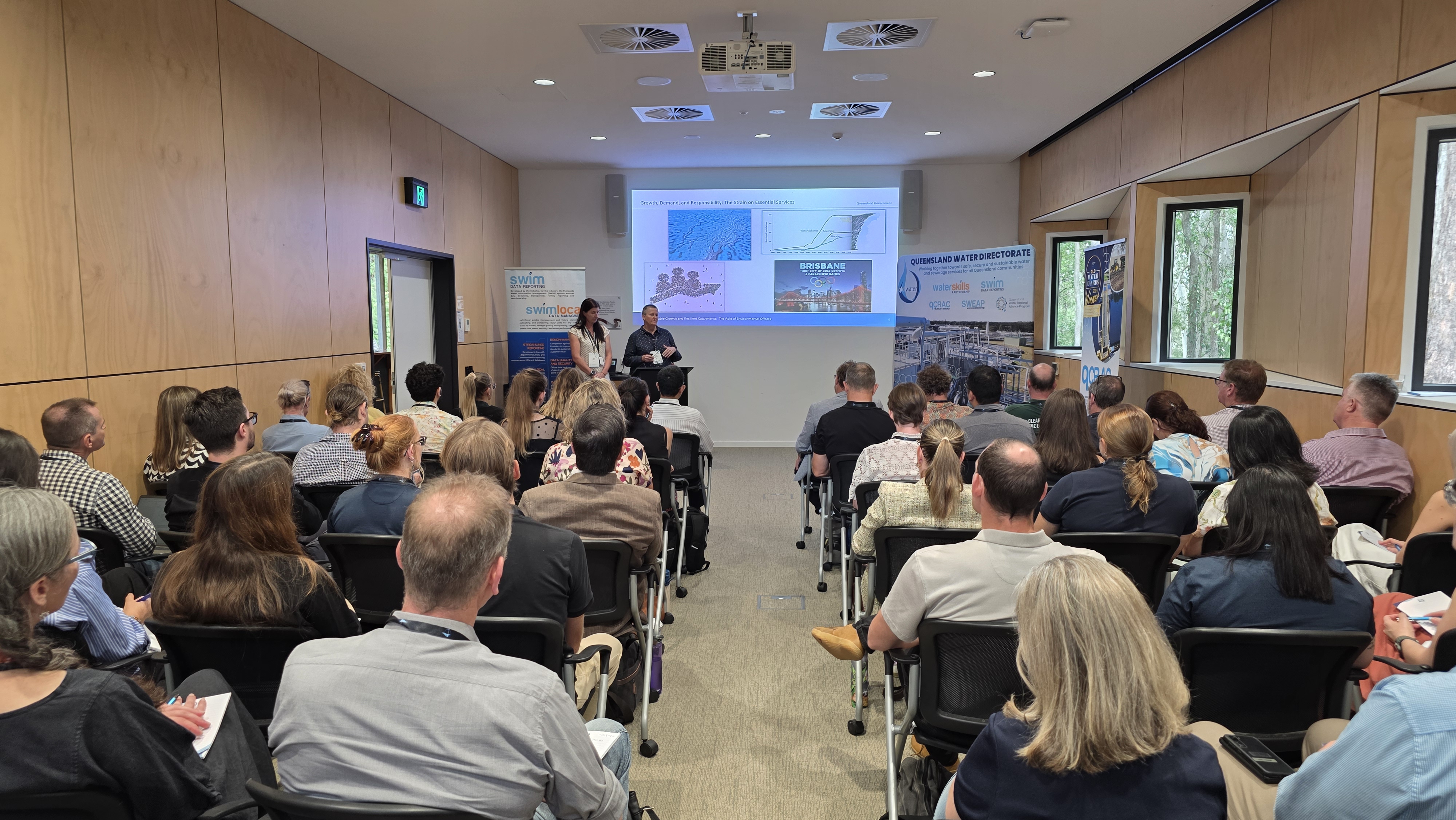
Sustainable Growth and Resilient Catchments – The Role of Environmental Offsets
by Chris Mooney, Director, Industry Development and Southeast Compliance in the Department of Environment, Tourism, Science and Innovation (DETSI) and Kim Piercy, Manager, Healthy Waters in DETSI
Environmental water quality offsets are playing an increasingly important role in helping Queensland balance sustainable growth with the protection of waterway health. As development pressures, climate impacts and reduced assimilative capacity in receiving environments place strain on traditional wastewater and stormwater management approaches, offsets provide a flexible pathway to achieve equivalent or improved environmental outcomes through catchment-scale solutions such as wetlands, restoration and nature-based treatment systems. Alongside established point source offset frameworks, there is also growing momentum around off-site stormwater offsets, with a discussion paper currently open for review that explores how these approaches could be implemented more formally across Queensland. This work signals a shift toward more integrated, outcome-focused approaches that support development while strengthening long-term catchment resilience.
Valuing River Systems – Building the Case for Sustainable Investment
by Matt Bradbury, Director, Clear Ridge Consulting and Dr Adrian Volders, Director, A.R. Volders Environmental Consulting
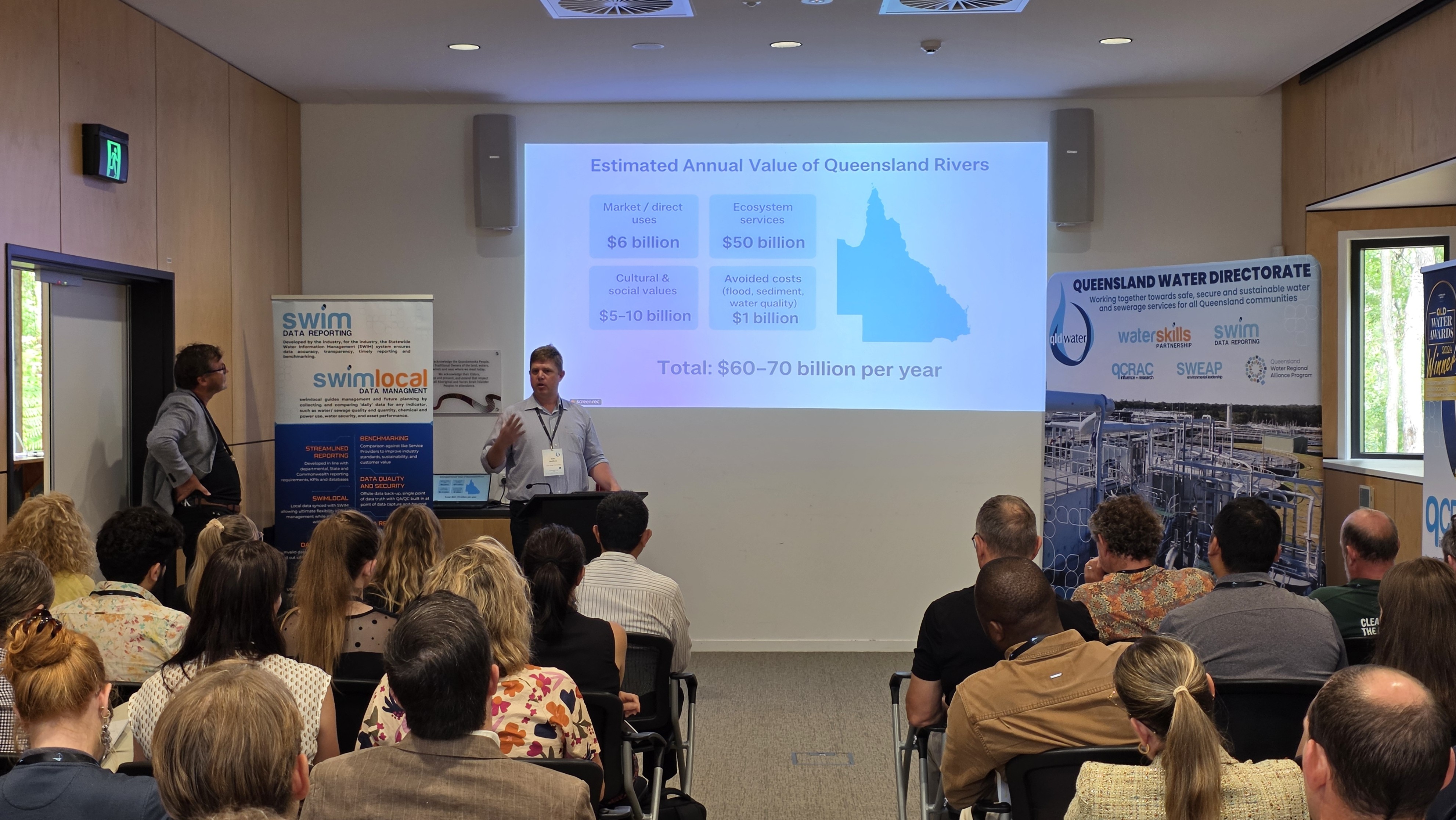
This presentation explored the importance of recognising and measuring the full value of river systems, highlighting that while rivers are often valued for direct uses such as water supply or irrigation, the majority of their contribution lies in the less visible or easily costed services they provide. Ecosystem markets of rivers involve the valuation, trading, and management of the natural services that healthy river systems provide, such as water purification, flood mitigation, biodiversity habitats, cultural connection, climate mitigation and carbon sequestration. These functions underpin community wellbeing and economic activity but are rarely accounted for in decision-making and policy development. When these broader ecosystem services are considered, Queensland’s rivers are estimated to deliver between $60–70 billion in annual value, reinforcing the need to view them not just as natural features, but as critical economic infrastructure.
Despite this immense value, current investment in river health remains relatively small. The presentation emphasised that better recognising and quantifying river system benefits can support stronger investment cases and more sustainable management approaches. Environmental offsets were also discussed as a potential mechanism to help create ongoing funding streams for river restoration and catchment improvement, enabling investment in nature-based solutions alongside traditional infrastructure to support long-term system resilience.
Dr Volders outlined the concept of micro-charging for environmental costs involving the implementation of small, incremental fees or taxes on products, services, or activities to account for their external environmental impacts, such as carbon emissions, pollution, or resource depletion (in this case, flushing the toilet). Micro-charging aims to internalize these costs, ensuring that environmental damage is reflected in market prices, thereby incentivizing more sustainable consumer and corporate behaviour. However, its effectiveness depends heavily on whether the system incentivises behaviour change, supports circular economy goals, the impacts of its educational messaging, or is simply treated as a pass-through on existing costs.
The discussion which followed this presentation finished on a contended note. Given the lack of water quality targets and supporting water quality science in SEQ, (and the unanimous feeling from all delegates that we cannot wait for this to happen), how do we stimulate market-driven improvements?
Do we simply pick an historical year where water quality had been measured and adopt that as the desired water quality target or should we look beyond water quality targets all together towards factors such as riparian zone restoration which is known to improve water quality by acting as natural buffers that filter pollutants, stabilize banks to reduce erosion, and regulate water temperature.
A New Nutrient Trading System
by Mark Waud, Portfolio Manager, Heathy Land and Water (HLW)
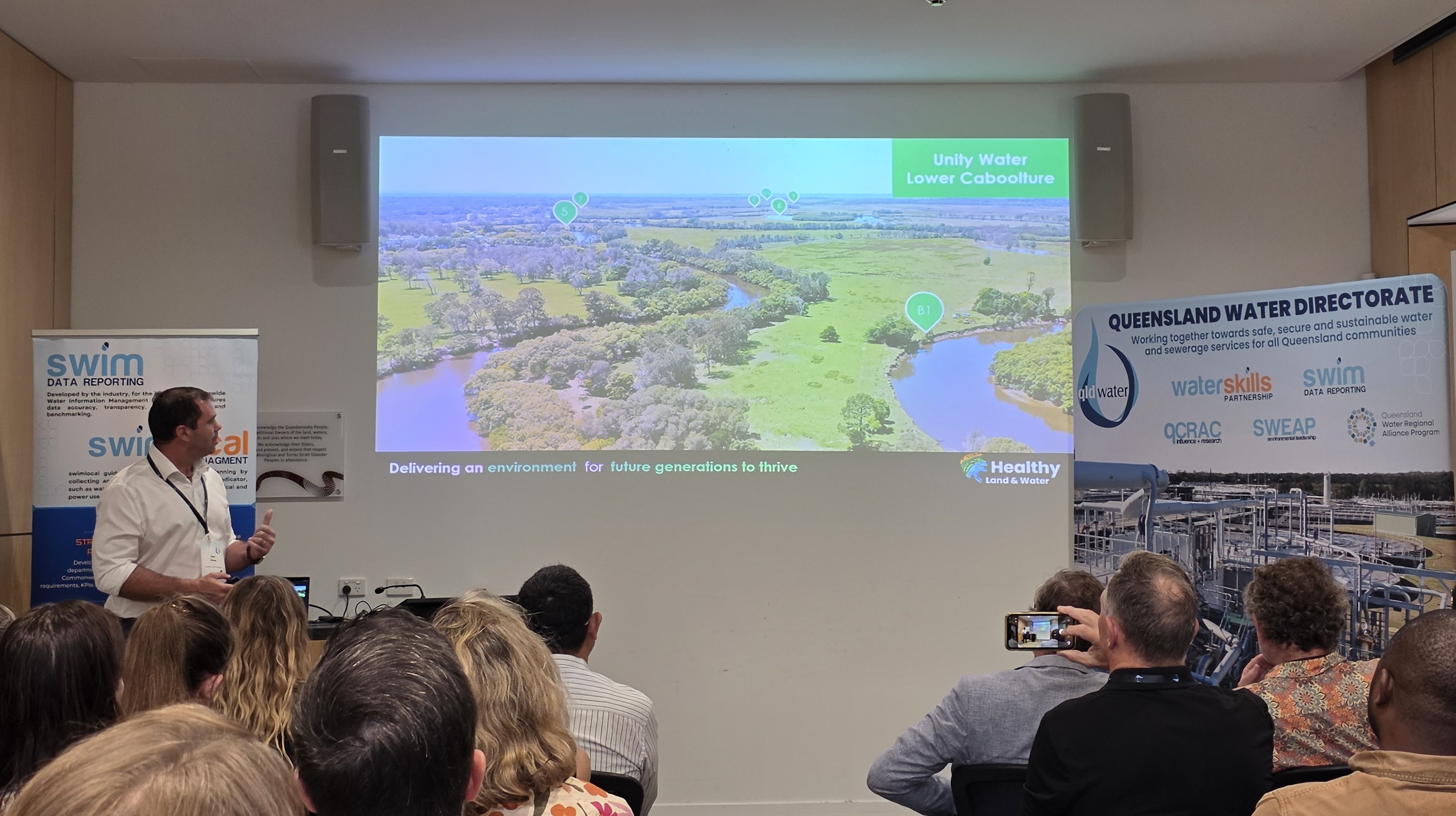
This presentation outlined the growing need for new approaches to managing nutrient impacts in the face of rapid population growth, increasing rainfall intensity and rising pressure on South East Queensland’s waterways. While significant investment has been made in wastewater treatment over past decades, the scale of future challenges is expected to outpace traditional infrastructure-based solutions. Nutrient offsets and catchment restoration projects, such as those implemented along the Caboolture River, demonstrate how nature-based interventions can deliver measurable reductions in nutrient loads while supporting broader environmental outcomes.
Building on this experience, the proposed Moreton Bay Water Quality Scheme developed by HLW introduces a cap-and-trade style nutrient trading system that links wastewater discharges with ecological improvements across the catchment. Designed to be scientifically robust and independently governed, the scheme aims to move beyond project-by-project responses toward an integrated, scalable market mechanism. By enabling investment in the most cost-effective water quality improvements, the approach has the potential to complement conventional treatment upgrades and create a sustainable pathway for protecting waterways as the region continues to grow.
From Outcomes to Markets: Quantifying Water Quality Offsets using ENVOMARK Assured Credits
by Dr Goslik Schepers, CEO, Ecomarkets
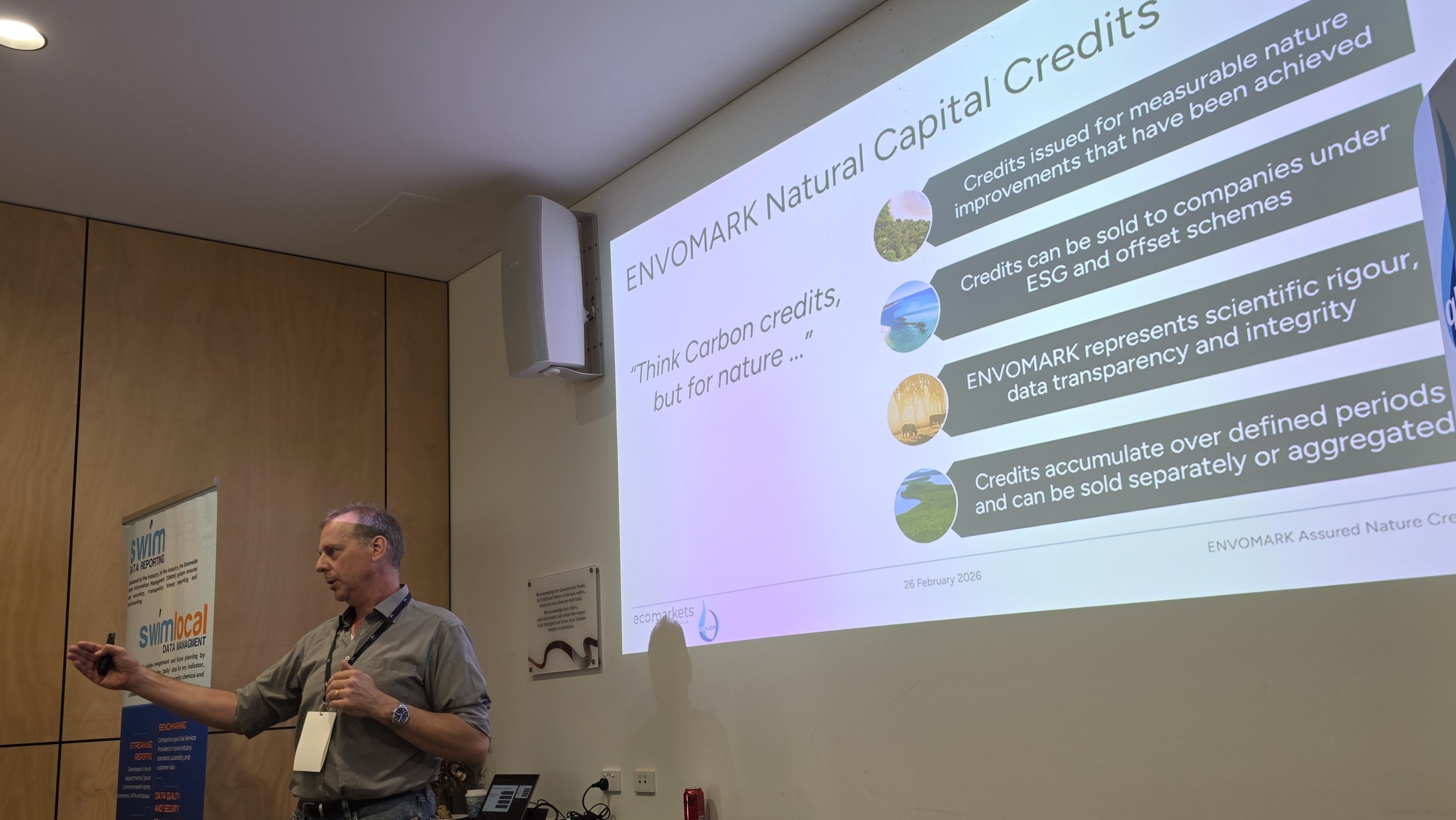
This presentation introduced ENVOMARK Assured Nature Credits as a market-based approach to quantifying and funding environmental improvements, positioning them to translate water quality and ecosystem outcomes into investable assets. Similar in concept to carbon credits, ENVOMARK credits are issued for measurable environmental improvements such as nutrient reduction, sediment control or biodiversity outcomes, and can be purchased by organisations to meet ESG commitments, offset impacts or demonstrate environmental stewardship. By providing scientific rigour, transparency and verification, the system helps turn environmental outcomes into tradable value, creating incentives for positive action rather than relying solely on regulatory compliance.
Through case studies such as the Ayr Brandon Macroalgae Bioremediation Facility, at the Burdekin wastewater facility, the presentation demonstrated how quantified improvements in nutrient removal can generate both environmental benefits and financial returns (in this case through Reef Credits), strengthening the business case for nature-based solutions – but only where water pollutant reduction targets exist. As markets expand beyond the Reef into areas such as the Murray-Darling Basin and Moreton Bay, ENVOMARK credits offer a pathway to activate voluntary investment in catchment restoration and water quality improvements, complementing mandatory offset frameworks and supporting long-term environmental outcomes.
Review of Existing Water Quality Offsetting and Trading Policy and Schemes
by Payton Te Nagio, Senior Research Assistant at Reef Catchments Science Partnerships, University of Queensland
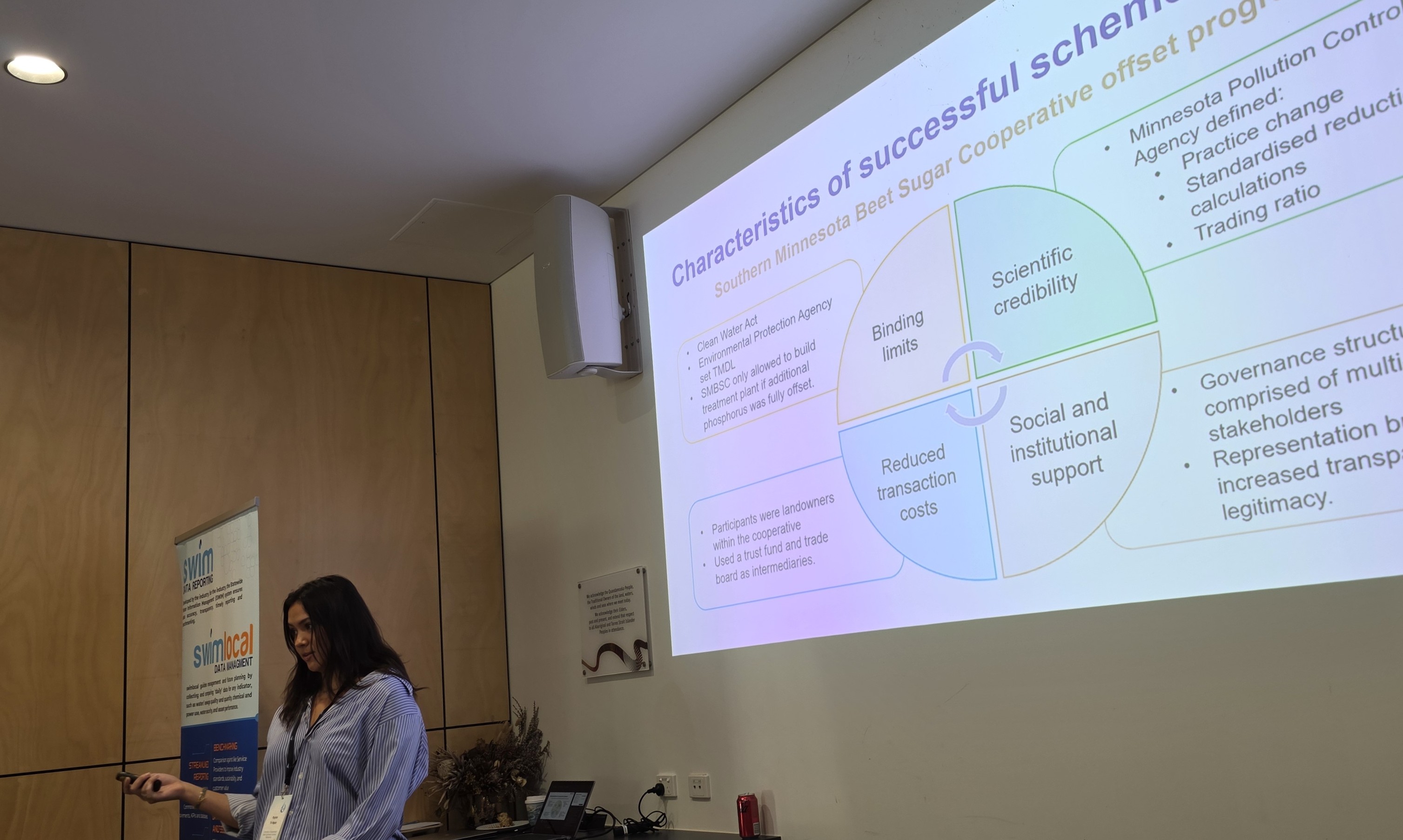
This presentation reviewed national and international experience with water quality offsetting and trading schemes to help inform the ongoing evolution of Queensland’s Point Source Water Quality Offsets Policy. It highlighted how offsets allow increased emissions in one location to be balanced by reductions elsewhere, either through upgrades at other point sources or through catchment-based actions that reduce diffuse pollution. While traditional offsetting tends to operate on a case-by-case basis, broader trading schemes offer a more structured, market-based approach that can achieve water quality outcomes more cost-effectively by enabling participants to exchange verified pollution reductions.
Lessons from global examples show that successful schemes rely on strong regulatory drivers, credible scientific methods, flexible trading structures and low transaction costs to encourage participation. Clear pollution limits, trusted governance and stakeholder engagement are essential to build confidence and maintain market activity. These insights provide valuable guidance for Queensland as it considers how offsetting and trading frameworks may evolve to support improved water quality outcomes while accommodating future development and regional variability.
Offsetting for Impact: Redland City’s Water Quality Offset Journey
by Dr Rebekah Kenna, Environmental Systems Officers, Redland City Council
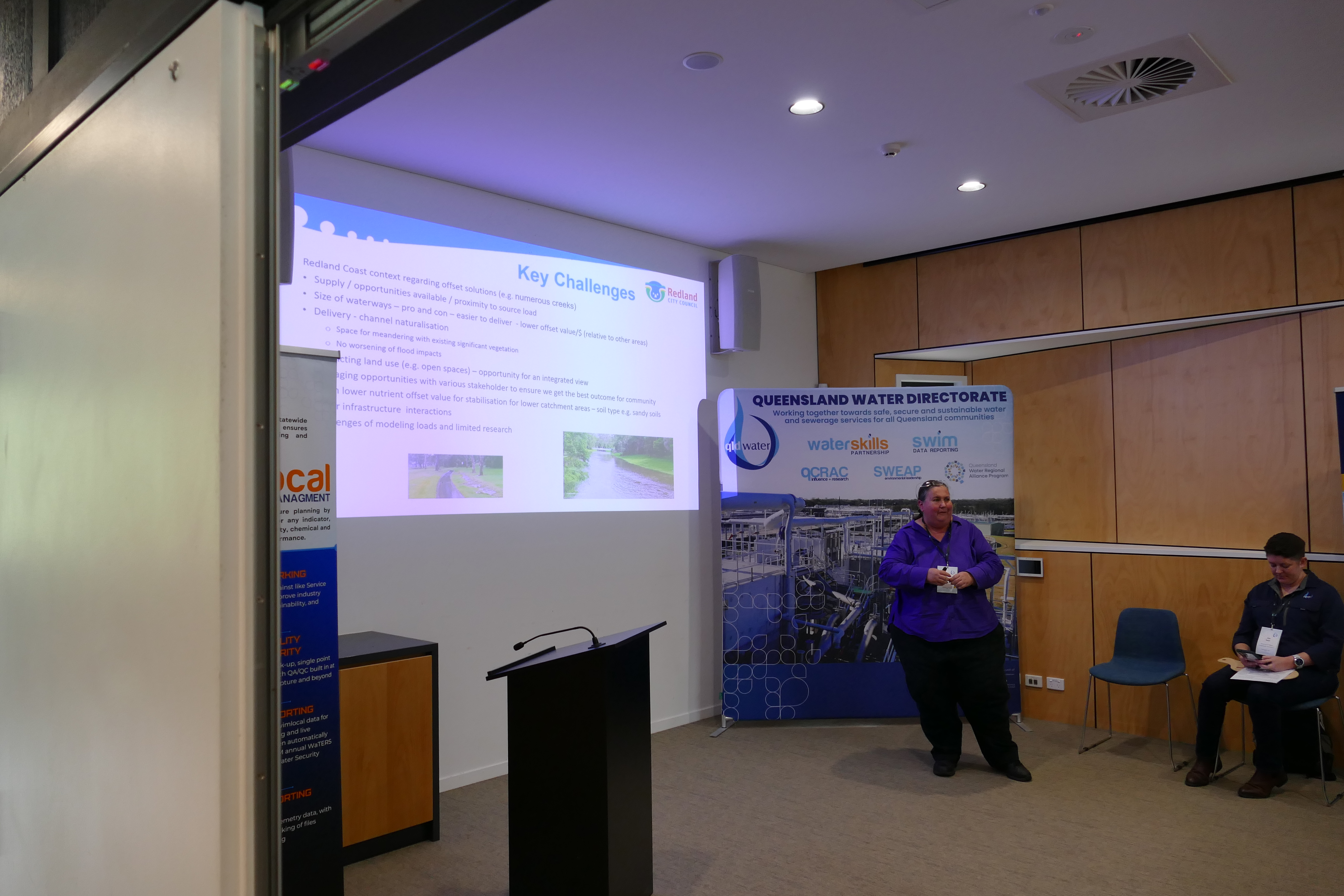
This presentation outlined Redland City Council’s journey in using water quality offsets as part of a broader, strategic approach to managing growth, ageing infrastructure and environmental limits. Recognising that traditional treatment solutions alone may not deliver the most effective outcomes, Council has explored how offsets can be used to achieve genuine net environmental benefits while maintaining flexibility in meeting regulatory requirements. Through an integrated planning process, more than 150 potential offset opportunities were investigated, including wetland restoration and channel naturalisation, positioning offsets as a practical tool to support long-term waterway health alongside essential service delivery.
A key example highlighted was the Shoreline development’s constructed mangrove and saltmarsh ecosystem — a first-of-its-kind nature-based solution designed to offset wastewater nutrient loads while also delivering habitat creation, shoreline protection and carbon sequestration benefits. With over 35,000 mangroves planted and ongoing research into performance and cost-effectiveness, the project demonstrates how offsets can move beyond compliance to create broader environmental and community value, supporting both improved water quality and more resilient coastal ecosystems.
Tallowwood Trail Experience
Guide: Cath Kelleher, Senior Advisor, Communications and Events, Redland City Council
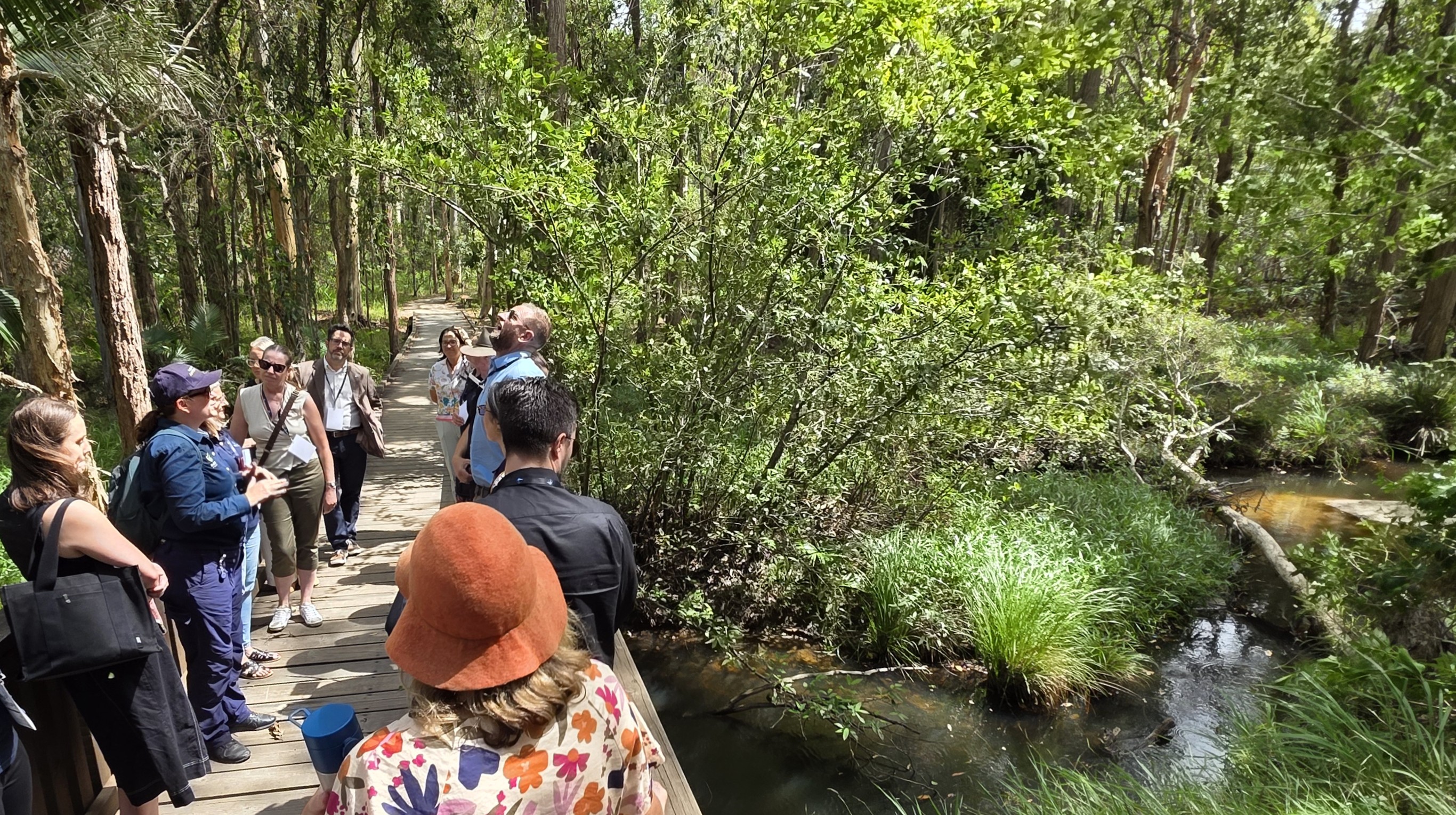
Cath Kelleher from Redland City Council led a guided walk along the Tallowwood Trail, offering attendees a chance to step outside and connect with the natural environment that underpins the day’s conversations. The walk provided a relaxed opportunity to learn about local flora and fauna, including the ancient tallowwood tree and the surrounding ecosystem, while reflecting on how our management decisions shape the health of waterways and landscapes.
The trail also included views over Coolnwynpin Creek, highlighting the important relationship between catchment health, biodiversity and community wellbeing. The session reinforced that environmental outcomes are not just achieved through policy and infrastructure, but through understanding, valuing and caring for the natural systems that support our water services.
Workshop: Top Three Messages to the Queensland Government
Facilitator: Dr Georgina Davis, CEO, Queensland Water Directorate
This workshop focused on identifying the key messages required to support stronger policy action to improve catchment health and support the water industry in SEQ.
While the St Lucia Declaration (2023) was referenced as a useful foundation and consensus on water quality trading and the importance of science, it was acknowledged that without an internal government champion, progress on the Roadmap to enable the development of water quality trading and other actions from the Declaration had not progressed.
The discussion centred on:
- Why previous policy momentum on the St Lucia Declaration has not translated into implementation, and
- What government decision-makers would need to hear in order to consider stronger interventions, including the potential for a pollution cap or equivalent mechanisms.
Scientific Certainty vs Timely Action
Participants noted the limitations of relying solely on pollutant load reporting to inform decision-making. Flood events, such as those experienced in 2011 and 2013, resulted in under-reporting of point source emissions. These periods may appear as low-load years in datasets, despite likely representing some of the highest impact conditions.
This highlights the importance of considering broader catchment condition, particularly riparian health, as a leading indicator of long-term outcomes.
Despite significant reductions in point source contributions since 2000 (estimated at 75–80%), catchment health continues to decline. This suggests landscape/catchment condition is now the dominant driver of environmental outcomes.
Strategic Context
For policy reform and program support for credits and new offset mechanisms to be viable, they must align with current government priorities.
Key considerations include:
- Housing supply and affordability
- Agricultural productivity (see Queensland’s agriculture strategy A 2040 vision to double agricultural production
- Water security planning
- Drought and Climate Adaptation Planning
- Regional economic resilience
- Tourism and
- 2032 Olympic and Paralympic Games
Within this context, catchment protection and restoration should be framed as enabling sustainable growth and economic prosperity rather than constraining it.
Messaging and language also need to be simple.
Policy Focus: Catchment Condition
Participants considered whether the primary policy focus should shift from:
Caps on pollutant loads entering estuaries to Measurable targets for riparian protection and restoration.
Improving catchment condition is expected to:
- Improve raw water quality
- Reduce treatment complexity
- Strengthen water security
- Support sustainable housing growth
- Enhance environmental resilience
Role of Agricultural Landholders
Much of the land requiring restoration in SEQ (and other areas of the State) is privately owned and used for agriculture. Achieving landscape-scale outcomes will therefore require active landholder participation.
Opportunities include:
- Nature-based markets and offsets
- Income diversification for farmers
- Alignment with existing commitments to support regional economies
- Positioning producers for future market requirements (e.g. deforestation-free supply chains)
- Adherence to emission and other environmental targets set by trading partners and overseas markets (such as the European Union)
Protection as a Priority
Participants emphasised that restoration efforts are currently being outpaced by ongoing loss of riparian vegetation.
Planning challenges include:
- Limited protection of waterway corridors (make space for our waterways)
- Development pressures reducing buffer widths
- Inconsistent application of protections
- Who rectifies and pays for historical damage to the catchment and water quality
Strengthening planning protections, including through State Planning Policy which was identified as a necessary first step.
Protecting existing assets will:
- Safeguard environmental and community values
- Preserve restoration opportunities
- Reduce long-term costs
Data and Implementation
Key enablers identified include:
- Improved access to shared data
- Reduced barriers to data sharing through streamlined governance approaches
- Monitoring riparian condition as a practical performance measure
Work underway through the Resilient Rivers Initiative (2015–2025) – the Council of Mayors (SEQ) program aimed at improving the health, water security, and climate resilience of SEQ's catchments and Moreton Bay. It focuses on reducing sediment, restoring fish habitats, and managing weeds through collaborative regional projects and provides an important foundation, including:
- Catchment action planning
- Mapping of ecosystem services
- Development of shared spatial data platforms
Policy Framing
A practical framework discussed was:
Avoid – Minimise – Mitigate
Avoid: Protect existing waterways and catchments.
Minimise: Reduce impacts of development.
Mitigate: Enable offsets and restoration markets that benefit both the environment and landholders.
Key Messages for Government
1. Healthy catchments support sustainable growth
Catchment condition underpins water security, housing viability and economic resilience.
2. Landholder participation is essential
Restoration at scale requires incentives and market mechanisms that support farmers and landholders.
3. Protection must precede restoration
Without stronger safeguards, restoration investments will continue to be offset by ongoing loss.
Action Items
- qldwater to produce a summary report of the Environment Forum and share presentations from the day.
- qldwater to distribute the St Lucia Declaration to stakeholders.
- Provide a demonstration of swimlocalTM for storing and displaying water quality and catchment health metrics to interested parties. For example, Noosa Council uses the swimlocalTM management database to store and display all water quality monitoring data sourced for the Noosa Shire.
- Organise a Closed Credit and Offset Forum in June/July for water service providers only to analyse opportunities.
- Disseminate existing market-based opportunities to water service providers particularly where there is alignment with current initiatives.
- Identify and document case studies, particular those at scale. Link these to current provisions and protections and identify gaps (alignment with Regional Plans, EPBC Act and tools etc). Use these to advocate for change. For example, the Queensland Government has committed to reviewing and updating all regional plans across the state by 2028, with a specific focus on delivering 13 new regional plans. The SEQ Regional Plan is currently under review. See Have Your Say On-line.
Acknowledgements
qldwater sincerely thanks all presenters, participants and contributors who made the Environment Forum a valuable and engaging event. We extend our sincere appreciation to Redland City Council for generously hosting the forum at the IndigiScapes Centre and to the IndigiScapes team for their support with the venue, catering and guided walk along the Tallowwood Trail.
Finally, we thank all attendees for their active participation and contribution to the conversations that will help shape future collaboration across the water sector.
An image gallery of the forum is available here.