Empowering Our People
Streamlining the dark art for regional utilities
Practical solutions to help service providers deal with trade waste.
Trade waste management in Queensland's regional water utilities is often seen as a "dark art," where the lack of a coordinated, state-wide framework leads to inconsistent practices across the state. On this page, we will share resources to streamline trade waste management in Queensland's regional water utilities.
The Water Supply (Safety & Reliability) Act 2008 (WS Act) defines trade waste as:
The water-borne waste from trade, industrial, commercial, medical, dental, veterinary, agricultural, horticultural, scientific research or experimental activities, excluding waste that is a prohibited substance; or human waste; or stormwater.
Trade waste has commonly been referred to as ‘liquid trade waste’, ‘industrial wastewater’, ‘industrial effluent’, ‘trade effluent’ or ‘trade wastewater’. The term ‘trade waste’ is used in this toolbox.
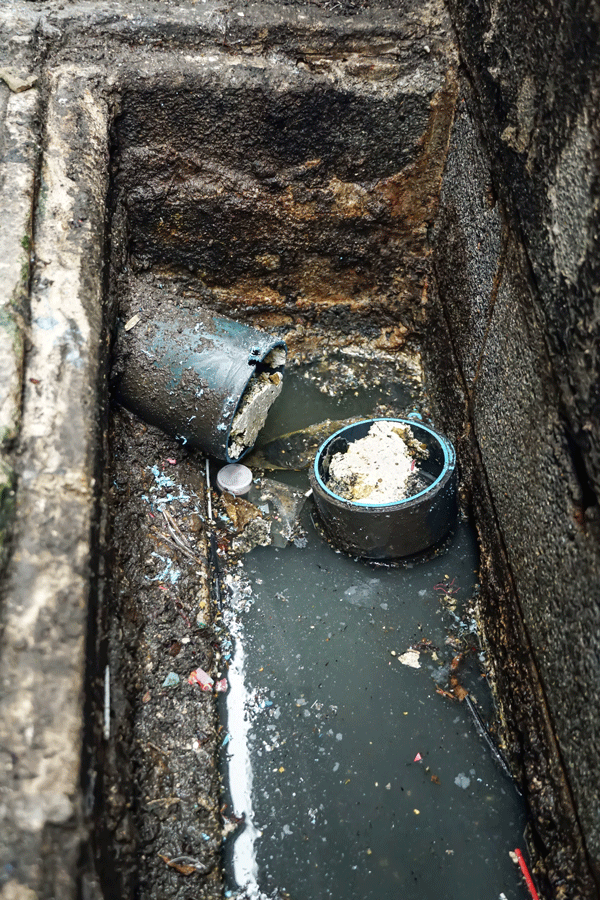
Trade waste discharge to the sewerage system includes, but is not limited to, wastewater discharged from:
Trade waste also includes:
.In 2025, qldwater commissioned trade waste expert Col Hester to develop a Model Trade Waste Plan tailored to regional communities.
The premise was straightforward: the plan should focus on the essentials instead of burdening councils with overly complex or unnecessary trade waste management practices. The goal was to develop a clear, consistent framework that smaller councils can adopt without reinventing policies or spending resources on low-risk activities.
Download Model Trade Waste Plan
(qldwater members can request a Word version of the document to adapt for their Councils. Please email enquiry@qldwater.com.au.)
The model trade waste plan provides an overview of trade waste management including:
Trade waste categories
The application and approval process
Hierarchy of trade waste governance documents
Trade waste policy statement, scope and objectives
Trade waste plan that sets out how Council provides a trade waste service that meets its obligations and objectives under policy, legislation and relevant environmental authorities.
The core of Col's Model Trade Waste Plan is Category Zero: businesses that pose no greater risk than domestic sewage and do not need trade waste management attention. Col advocates for a high tolerance for discharge before trade waste management is required, including for typical small businesses such as hairdressers, florists, dentists and childcare centres. Even motels and schools could fall under Category Zero, provided they operate at a relatively small scale, such as schools with fewer than 100 students. Larger institutions may require additional controls, such as grease arrestors, but the idea is to ensure that trade waste regulations focus only on those businesses that truly warrant it.
The following documents form part of the Model Trade Waste Plan to support Queensland water service providers in implementing best practice trade waste management. They have been prepared to promote consistency, clarity and regulatory confidence in trade waste approval processes across the sector.
The model application forms demonstrate contemporary best practice and align with the recently developed Model Trade Waste Plan. Each document has been reviewed by members of the regional Trade Waste Interest Groups (TWIGs) to ensure practical relevance and consistency with operational and regulatory expectations.
Two application pathways are provided: Commercial Premises, and Manufacturing/industrial premises, recognising the differing risk profiles and information requirements of these customer groups.
For each pathway, an example of a “properly made” application is also provided as guidance to assist councils and applicants to understand the level of detail and supporting information expected.
Download Trade Waste Application Form Commercial Only
Download Example Trade Waste Application Form Commercial Only
Download Trade Waste Application Form Industrial Only
Download Example Trade Waste Application Form Industrial Only
Coming soon: A Best Management Practices Guideline for Food Service Businesses, including practical guidance and infographics that councils can provide directly to food service customers to support compliance and environmental outcomes.
Over the years, qldwater members have shared a range of sample documents to help others along our shared journey. A special shout out to Townsville City Council for sharing a range of Trade Waste Fact Sheets including:
Find them under the Member Sample Documents tab of the Sewage Treatment page of the Resource Library.
qldwater worked with Livingstone Shire Council to hold the Central Queensland Trade Waste Interest Group (TWIG) meeting as part of a regional conference held at the Yeppoon Town Hall in 2022.
The meeting was well attended with representatives from across the CQ region hearing a range of interesting presentations including:
Recordings of all the presentations are available from this link.